
Einstein, Relativity and … Anti-Semitism?
History of Science
- Participant
-
Jaume Navarro
EHU, Ikerbasque - When
-
2026/05/14
17:00 - Place
- Josebe Olarra Auditorium, DIPC, Donostia / San Sebastián
- Organizers
- DIPC, Group for the Integrated History and Philosophy of Science (iHPS, EHU)
- Add to calendar
-
 iCal
iCal
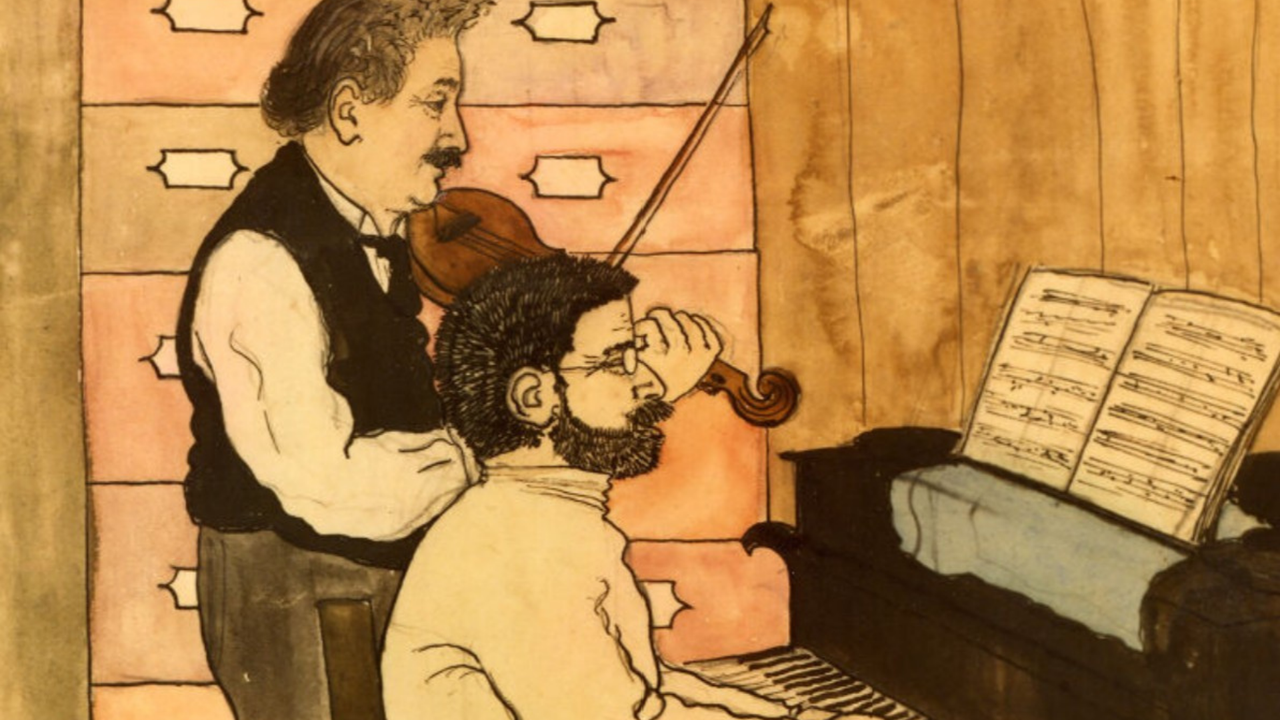
DIPC, together with the group Integrated History and Philosophy of Science (iHPS) of the University of the Basque Country (EHU), organizes a monthly colloquium with professional historians of science aimed at broadening the formative activities of scientific researchers as well as reaching out to the general public on matters related to the history of science.
In 1951, the influential British physicist and mathematician Edmund T. Whittaker (1873–1956) published a history of physics in which he appeared to downplay Albert Einstein’s contribution to the formulation of special relativity in 1905. Among the explanations offered for this reinterpretation of history was the accusation of anti-semitism. But was that really the case?
In this talk given by Jaume Navarro, an Ikerbasque professor-researcher at the University of the Basque Country (EHU), we will first take a look at the anti-Semitic attitudes of many of Einstein’s opponents, particularly in nationalist Germany during the interwar period. Whittaker might have been just one of many anti-semites, but the best way to find out is to ask him, even though 70 years have passed since his death, by reading his correspondence. What motives did he have, whilst writing his book, for attempting to downplay Einstein’s historical significance? Through this episode, we will not only learn about Einstein and his opponents, but we will also be able to experience one of the joys of the science historian’s work in the archives.
The lecture will be in Spanish.
Free entry until full capacity is reached.
About the speaker
Jaume Navarro is an Ikerbasque research professor at the University of the Basque Country (EHU). He has published extensively on the history of physics, historical epistemology and the historiography of the relationship between science and religion. His works include A History of the Electron. J.J. and G.P. Thomson (Cambridge University Press, 2018), Ether and Modernity. The Recalcitrance of an Epistemic Object in the early twentieth century (Oxford University Press) and Ciencia-Religión y sus Tradiciones Inventadas (Tecnos, 2022).